
Cornelius Fred Moore |

mother of Fred Moore
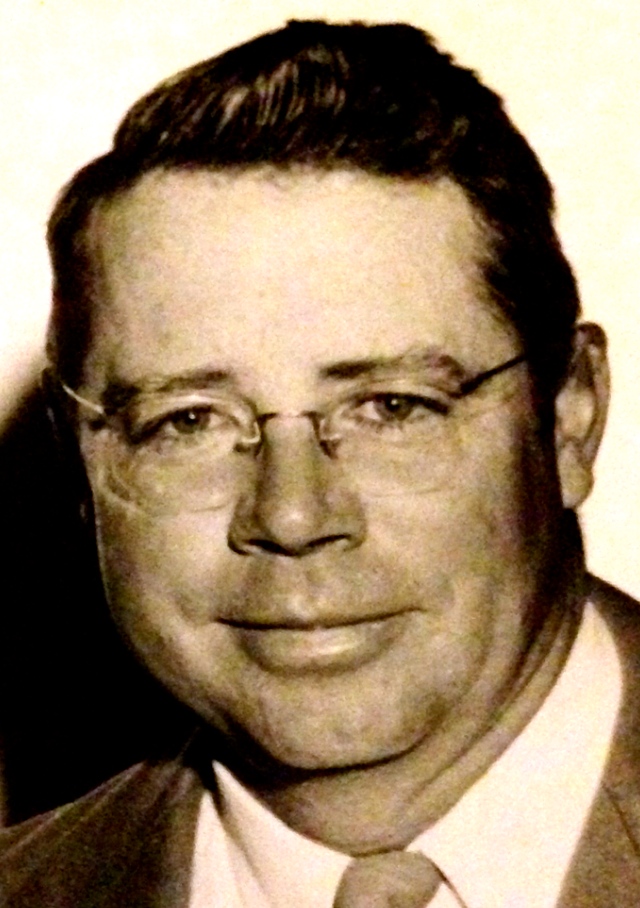
father of Fred Moore
Fred graduated from Saint Xavier High School in 1954 in Louisville, KY. He attended Notre Dame University, receiving his B.S. in physics in 1959. Following graduation he enrolled in The University of Louisville to pursue an MS in physics. While working on his degree, he worked as a construction foreman for Skilton Company. In 1961 he received a masters degree from Univerisity of Louisville under the supervision of Professor Nicholas Mostovych. He earned a PhD from Florida State University in experimental nuclear physics in 1964. His supervisor was Professor John Fox. It was at FSU that Dr. Moore discovered isobaric analog states in heavy nuclei. This work was cited by the National Academy of Sciences in “Physics in Perspective” as one of the most important nuclear physics discoveries of the decade.
In 1961, Fred married Patricia Ann "Pat" Thompson in The Blessed Sacrament Church in Tallahassee, Florida. Pat was a graduate of Chelmsford High School in Chelmsford, MA. She studied mathematics at Florida State University. They later divorced. In 1993, Fred married Judy A. Palmore in Austin, Texas. Judy attended Texas Western College and earned a BS in Education from University of Texas at El Paso.
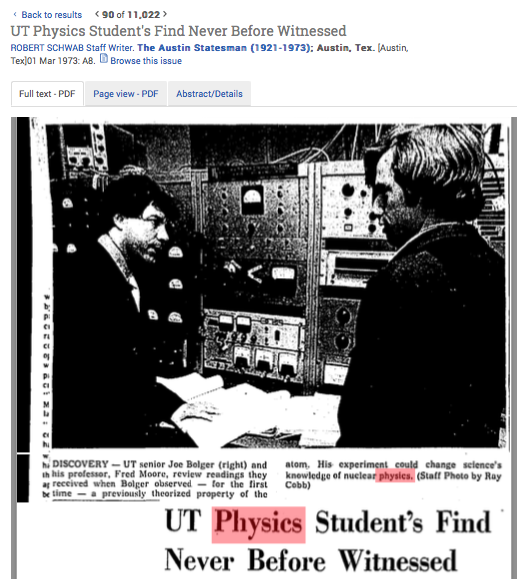
In 1965, Dr. Moore join the faculty of the University of Texas at Austin and the Center for Nuclear Studies. That year he was also made a fellow of the American Physical Society. He was a Visiting Professor at the University of Heidelberg in Germany from 1967-1968, conducting nuclear physics research at the Max Planck Institute. Over the next ten years, the Center for Nuclear Studies at Texas flourished. Most of the early research at the Center for Nuclear Studies was based on isobaric analog states. In 1970, he pioneered the study of x-ray and Auger electron transitions from highly ionized atoms. These experiments were followed up in laboratories all over the world. In 1974, he began a study of pion-nucleus interactions based on experiments carried out at Los Alamos National Laboratory. Several of the pion charge exchange reactions involved double isobaric analog states and double giant resonances (at excitation energies over 30 MeV). In 1988, Gerald Hoffmann and he became involved with the development of the STAR program at Brookhaven National Laboratory. Fred lectured at numerous universities and laboratories throughout the world.
In 1991, Professor Moore, following on the work of Professor Charles Scherr, initiated a computerized homework and testing program. This was one of the earlier implementation of computer use to augment classroom teaching. Other universities, such as Michigan State, North Carolina State, Massachusetts, Illinois, etc., later developed similar capabilities. The Homework Service program, now called Quest, is used throughout the world and processes a million responses to homework problems per week. Since then computerized teaching and testing has become a world-wide industry.
Fred passed away October 3, 2024. He was survived by his wife Judy and his children, Thomas,
Here is his obituary:
Cornelius Frederick Moore, Jr., Ph.D., a distinguished experimentalist in the field of molecular, atomic, and nuclear physics, passed away October 3, 2024. Professor Moore, who taught at The University of Texas at Austin for decades, was known among his colleagues and students for being an ingenious and brilliant researcher. As a highly involved teacher, he taught his students how to master the existing scientific material and push the envelope toward new advances in the field of physics. He was 88.
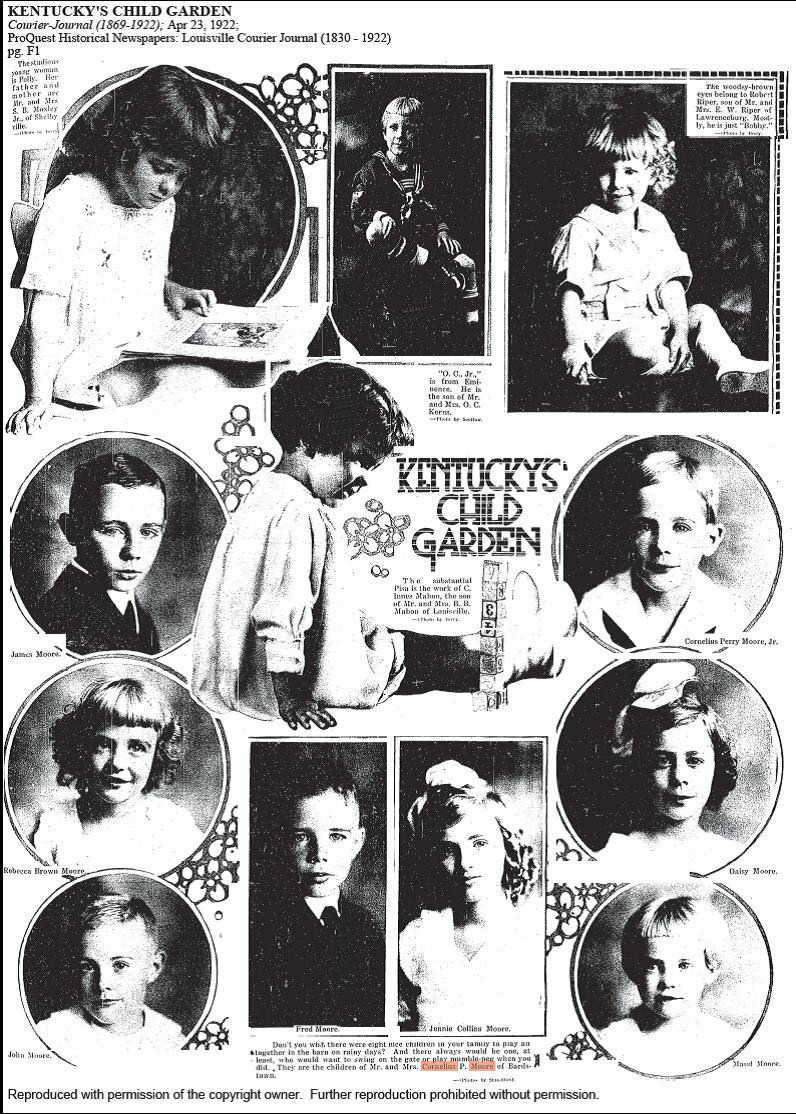
The first of five children, he was born on March 18, 1936, in Louisville, Kentucky to violinist Jane Lutkemeier Moore and civil engineer Cornelius Frederick Moore, Sr. Shortly after Fred Jr.’s birth, he underwent treatments for a clef palate, a unique ailment-turned-asset that resulted in his inimitable professorial speaking voice.
While Fred Sr.’s work took the family to Colorado, Nebraska, Alabama, Minnesota and Washington, Fred Jr. stayed behind with his grandmother to convalesce for several years. After the family took up permanent residence in Louisville, Fred Jr. developed a work ethic that continued throughout his life. From his pre-teen years operating heavy equipment on his father’s construction sites, to tending chickens on a farm and photographing campus life for student publications, he never paused. Always hard working and a high achiever, he delivered the daily newspapers on his bicycle before school and excelled as an Eagle Scout. An avid sailor, he built a custom fiberglass sailboat and raced in annual regattas on the Ohio River.
For years cousins referred to him as the “Master of the Universe,” a moniker Fred gave himself in jest. Or perhaps not entirely in jest as, early on, he aspired to learn the secrets of the universe. His witty, impish, and scintillating humor kept the family laughing. Some nicknames for them included, “Uglier-Than-I-Am-#1,” “Uglier-Than-I-Am-#2.” His hilarity and twinkling eyes brought forth a contagious joy which pervaded his many lifelong loyal friendships. He earned a B.S. in Physics in 1959 at the University of Notre Dame; an M.S. in Physics in 1961 at the University of Louisville and a Ph.D. in Physics in 1964 at Florida State University.
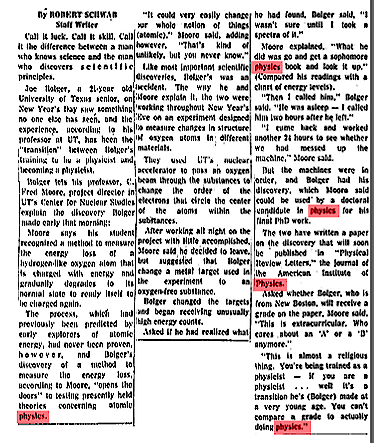
While in Tallahassee, Fred married fellow FSU student, Patricia, on June 3, 1961. After his post-doctoral studies, he moved his family to Austin and joined the Physics Department at UT. His early research involved the discovery of isobaric analog states in heavy nuclei. Physics in Perspective, a National Academies Press publication, cited his work as one of the most important nuclear physics discoveries of the decade. In 1965, he was made a fellow of the American Physical Society. Fred collaborated with physicists internationally, which included a sabbatical at the Max Planck Institute for Nuclear Physics in charming Heidelberg, Germany, developing his talents, knowledge, and skills on sophisticated experimental equipment. Fred was offered enticing scientific positions in Saudi Arabia and at Princeton but chose to keep his work at UT with its outstanding faculty and excellent laboratory. He also performed research at Argonne, CERN, JINR, Lawrence Livermore, Oak Ridge, Stony Brook, and numerous other facilities throughout the world.
With Professor Moore’s leadership, UT’s Center for Nuclear Studies flourished. During the 1970s era, he pioneered the study of x-ray and Auger electron transitions from highly ionized atoms. These experiments were followed by laboratories all over the world. In 1974, he began a study of pion-nucleus interactions based on experiments carried out at Los Alamos National Laboratory. In the 1980’s he became involved with the development of the STAR program at Brookhaven National Laboratory. His total life energy in physics resulted in over 300 professional scientific publications. Professor Moore’s eminent standing and innovations in the field of nuclear science were recognized when he was named Professor Emeritus of Physics with The University of Texas at Austin. Prior to his retirement, he was honored with the Marian Harris Thornberry Centennial Professorship in Mathematics or Physics. He retired in 2008 but continued to mentor graduate students for many years thereafter.
Professor Moore earned his lasting legacy by excelling in nuclear experimentation and bringing practical applications of its science to students through the non-profit Homework Service program he founded in 1991. The program, designed to augment classroom teaching via online interactivity, was later renamed Quest. By assigning each student unique problems, it inherently fostered both collaboration between students and mastery of concepts. Fred spoke before and worked with the Texas legislature in pioneering this new paradigm for scientific education, resulting in passage of the bill into law and extensive usage of the program. Quest is now used throughout the world and processes millions of responses per week. A Quest colleague said, “I learned a great deal from Fred. The help he gave me was quite instrumental in producing who I am today.”
Fred’s love of nuclear research was exceeded by his immense love, generosity and devotion to his family. He was a big supporter of Notre Dame and enthusiastically enjoyed watching the Fighting Irish football games. A delightful storyteller, he regaled people with entertaining and humorous tales. Bridge was a game he relished and at which he excelled, achieving the Bronze Life Master rank.
Professor Moore was predeceased by his parents and a nephew. Survivors include his wife, Judy, whom he married on March 6, 1993; his prior wife, with whom he had five children: Ingrid (John), Snow (Jeff), Fritz, Holly, and Thomas (Rachel), three step-children: Carrie (Carlos) Jauregui; Tim (Danor) Padden; Jill (Andrew) Urban; his siblings: Fr. Christian Moore, OFM Conv., Mery Ann Moore, Patrick (Taffy) Moore, M.D., and Frank (Cherie) Moore, P.E.; eleven grandchildren; a great-grandson; and a niece and seven nephews.
Fred’s lifelong quest to Master the scientific secrets of the Universe is that which eventually took him back into it. Expressions of sympathy may take the form of contributions to the charity of your choice. Per his request, no public services will be held.
Fred was an exquisitely entertaining, enlightening, and loving person who will be dearly missed by all those who knew him!
Cornelius Fred Moore Jr. Photo Album |
|
|---|---|

|

|

|

|
|
|
|
|
|
|
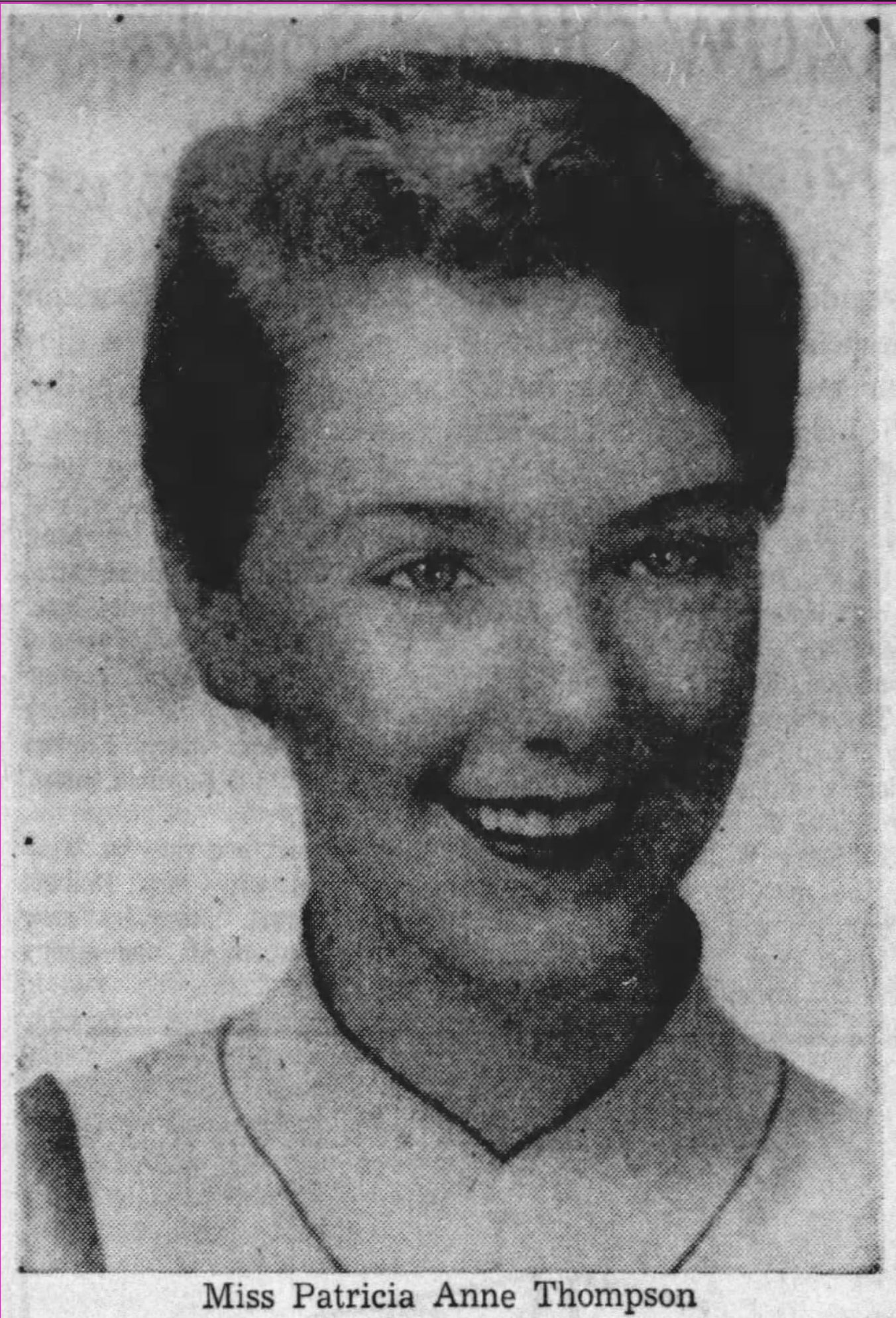
(photo from Tallahassee Democrat, May 14, 1961) |
|
|
|